The prohibition of discrimination in the workplace is one of the most important principles of labor law. According to the Labor Code, all employees should be treated equally when establishing and terminating employment contracts, determining employment conditions, promotions, and accessing training to improve qualifications. This equality should be ensured regardless of characteristics such as gender, age, disability, race, religion, national origin, political beliefs, trade union membership, denomination, sexual orientation, as well as the type of contract (fixed-term or indefinite) and working hours (full-time or part-time).
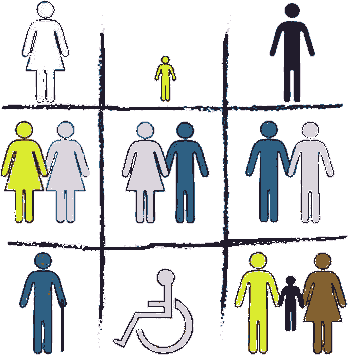
Equal treatment means that no one may be discriminated against, either directly or indirectly, on the grounds listed above.
Direct discrimination occurs when an employee is, or may be, treated less favorably than others in a similar situation because of one or more of the characteristics listed.
Indirect discrimination occurs when seemingly neutral rules or actions cause a group of employees with specific characteristics to experience worse working conditions, and these differences are not justified by objective and legitimate reasons.
Discrimination can also manifest itself in:
Inciting others to violate the principle of equal treatment,
Behavior that violates the dignity of an employee or humiliates them (harassment).
A violation of the principle of equality is an employer’s action that causes differences in the treatment of employees based on the characteristics listed at the beginning, resulting in, among other things:
Rejection of a candidate or termination of an employment contract,
Lower pay or other working conditions, omission from promotions or bonuses,
Refusal to participate in training – unless the employer demonstrates objective and legitimate reasons.
Furthermore, employees are entitled to equal pay for work of equivalent qualifications, responsibility, and effort.
This remuneration includes all salary components and other work-related benefits, regardless of their form or name.
Equal value is defined as tasks requiring similar qualifications (confirmed by documents or experience), responsibility, and commitment.

 english